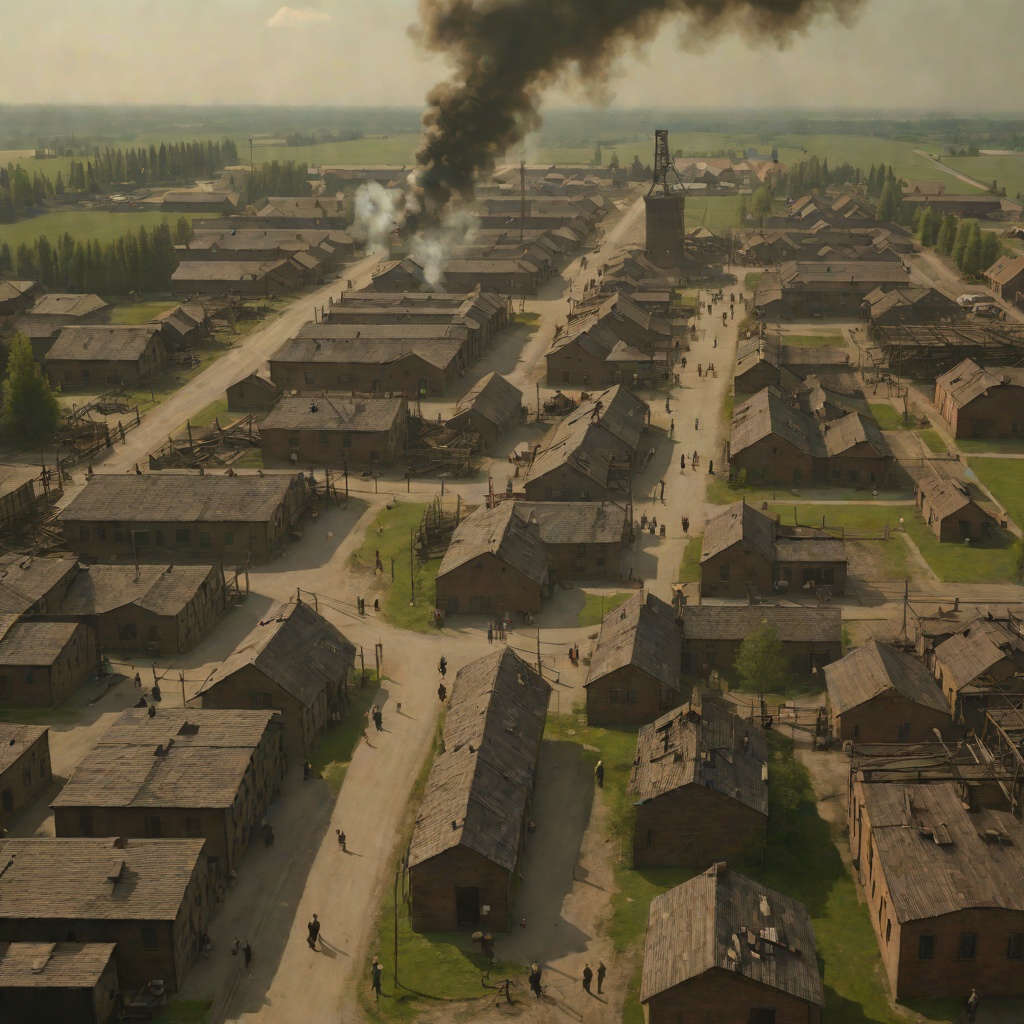
Lale witnesses the gas-van murders at Birkenau
The Tattooist of AuschwitzLale witnesses the gas-van murders at Birkenau is the first mass killing he sees at Auschwitz-Birkenau, a scene that shatters his remaining illusions about the camp and marks the beginning of his psychological trauma. On a beautiful spring day, Lale follows a truck behind the administration building and watches dozens of naked men being herded into an adapted bus, gassed, and unloaded as dead bodies. The event leaves him physically ill, feverish, and unable to rise the next morning, and its memory persists through his later imprisonment and his postwar life.
The Setting and Lale's Curiosity
At this point in his imprisonment, Lale has already been processed into Auschwitz-Birkenau, receiving the number 32407 tattooed into his left forearm with a wooden needle and green ink, and he has been assigned as the Tätowierer, the camp tattooist, working under the supervision of Stefan Baretski. He has been given a single room in a newly completed block and extra rations, privileges that set him apart from ordinary prisoners. On a beautiful spring day, not too hot, Lale watches as a large, enclosed truck continues past the usual point for unloading building supplies and drives around the back of the administration building. He knows that the boundary fence lies not far beyond and that he has never dared venture to this area, but curiosity gets the better of him now. He walks after it with an air of "I belong here, I can go where I want," a confidence born of his privileged position as the Tätowierer.
The Gassing Bus
Peering around the corner at the back of the building, Lale sees the truck pull up beside an odd bus that has been adapted into a bunker of sorts, with steel plates nailed across the window frames. He watches as dozens of naked men are herded out of the truck and led toward the bus. Some enter willingly, while those who resist are hit with a rifle butt, and fellow prisoners drag the semiconscious objectors to their fate. The bus is so full that the last men to board cling to the steps with their tiptoes, their naked bottoms hanging out the door, while officers shove their weight against the bodies. Then the doors are slammed shut. One officer walks around the bus, rapping on the metal sheets, checking that everything is secure. A nimble officer clambers onto the roof with a canister in his hand, opens a small hatch, and upends the canister inside, then slams the lid down and latches it. As the guard scurries down, the bus shakes violently and muffled screams can be heard.
The Aftermath and Lale's Reaction
Lale drops to his knees, retching, and remains there, sick in the dirt, as the screams fade. When the bus is still and quiet, the doors are opened and dead men fall out like blocks of stone. A group of prisoners is marched out from beyond the other corner of the building, and the truck backs up as they begin transferring the bodies onto it, staggering under the weight while trying to hide their distress. Lale has witnessed an unimaginable act. He staggers to his feet, standing on the threshold of hell, an inferno of feelings raging inside him. The next morning he cannot get up; he is burning up with fever, a physical collapse that mirrors the psychological shock of what he has seen.
The Enduring Trauma
The memory of the gas-van murders does not leave Lale. During his later imprisonment in Block 11, the punishment block, he sits in a cell for two days with only a crack of light under the door, listening to the cries and screams of others while reliving every moment he has spent with Gita Furman, the young woman he first met when he tattooed her number, 34902, and whose eyes made his heart seem to stop and begin beating for the first time. The contrast between the horror of the gas van and the tenderness of his memory of Gita defines his inner life in the camp. Even decades later, the trauma persists. His son recalls that his father was comfortable talking about his adventures in the camp, but only on Jewish festivals when the men would sit around the table and chat about their experiences. The lack of emotion and heightened survival instinct that remained with Lale, to the point that he did not shed a tear even when his sister passed away, was a direct consequence of seeing death on such a grand scale for so many years. He told his son that after losing his parents and brother, he found he was unable to weep—until his wife passed away, which was the first time his son ever saw him cry. The gas-van murders at Birkenau were the first of the mass killings that would inure him to death and shape the emotional reserve that defined his postwar life.